🎬xAI's video model climbs the leaderboards
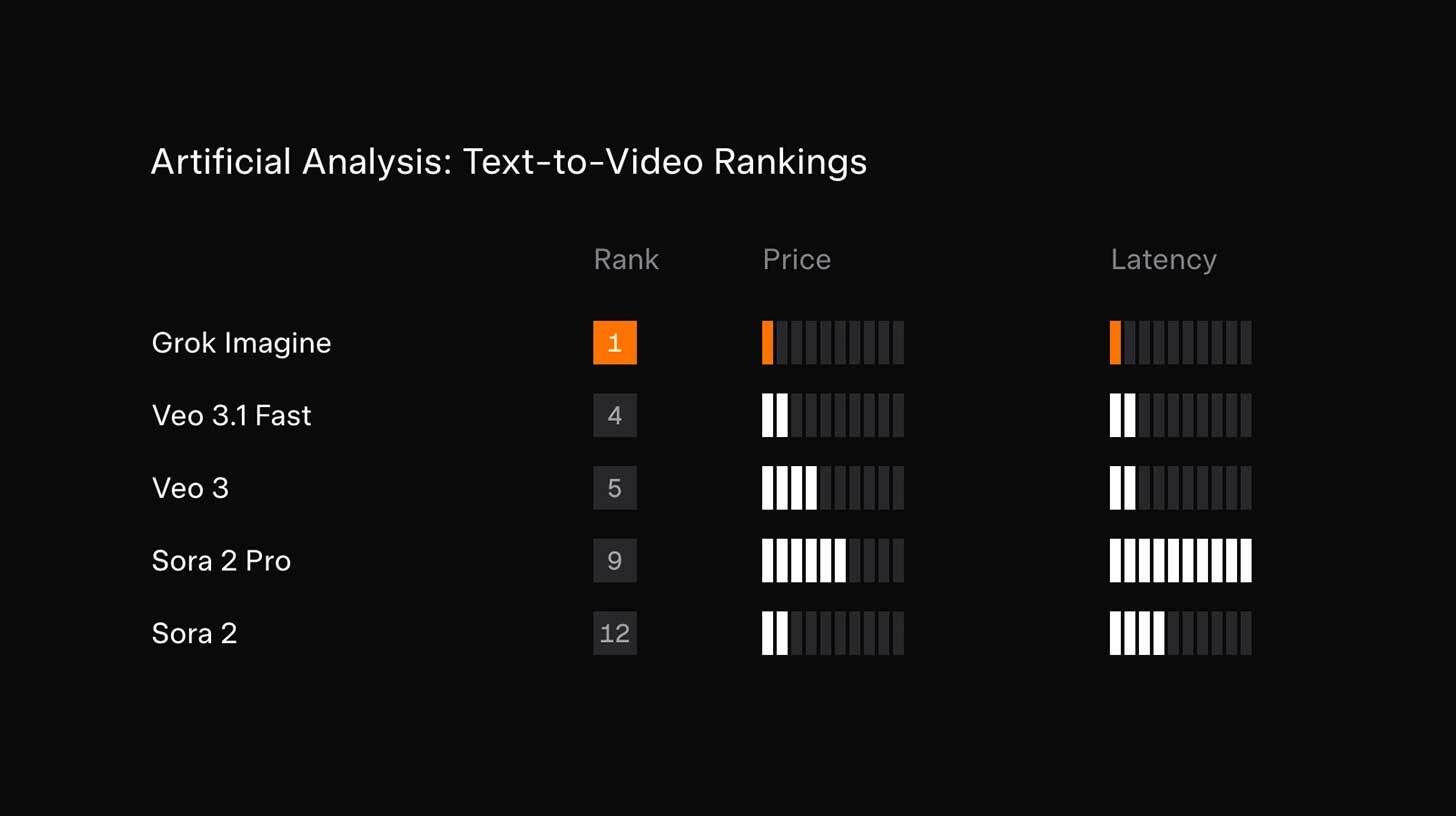
xAI just released the Grok Imagine API, a new AI video generation and editing suite that jumped to the top of Artificial Analysis rankings for both text and image-to-video outputs while undercutting rivals on price.
- —The API handles text-to-video, image-to-video, and video editing tasks, with clips up to 15 seconds and native audio baked in.
- —Grok Imagine costs $4.20 per minute with audio included, coming in significantly cheaper than Veo 3.1 at $12/min and Sora 2 Pro at $30/min.
- —Editing tools let users swap objects, restyle entire scenes, animate characters with custom performances, and shift environments on command.
- —Imagine debuts at No. 1 on AA’s text and image to video leaderboards, and comes in behind just Veo 3 and Sora Pro in Arena’s Video Arena.
Why it matters: This is an impressive move up the leaderboard for xAI, especially given the wildly low price point compared to top rivals. If the quality holds up at scale, the aggressive pricing could make Imagine the default choice for creators (and now devs to integrate into apps) who need to iterate fast without burning through budgets.

🌍Google opens its AI world generator to the public
Google DeepMind launched Project Genie, a web app that lets users create and explore AI-generated worlds in real time — coming five months after previewing the Genie 3 model that powers it in August.
- —Users prompt a setting and a character, preview the scene via Nano Banana Pro and Gemini, then navigate an explorable world in first or third-person.
- —Characters can walk, fly, or drive through environments, with the model remembering what it's built, so returning to areas stays visually consistent.
- —Sessions are currently capped at 60 seconds due to compute costs — with each user getting a dedicated ‘chip’ while exploring for their unique session.
- —The rollout is limited to Google’s AI Ultra tier ($250/mo) subscribers, with access set to expand to other tiers in the future.
Why it matters: The applications of world simulators like Genie 3 are endless, from robotics training and gaming to architecture, and the tech is finally at a level where users can actually experience the vision. With World Labs, Runway, Yann LeCunn’s AMI, and others also pushing forward, simulating reality is getting closer to… reality.
🧠Build a competitor database with Claude Cowork
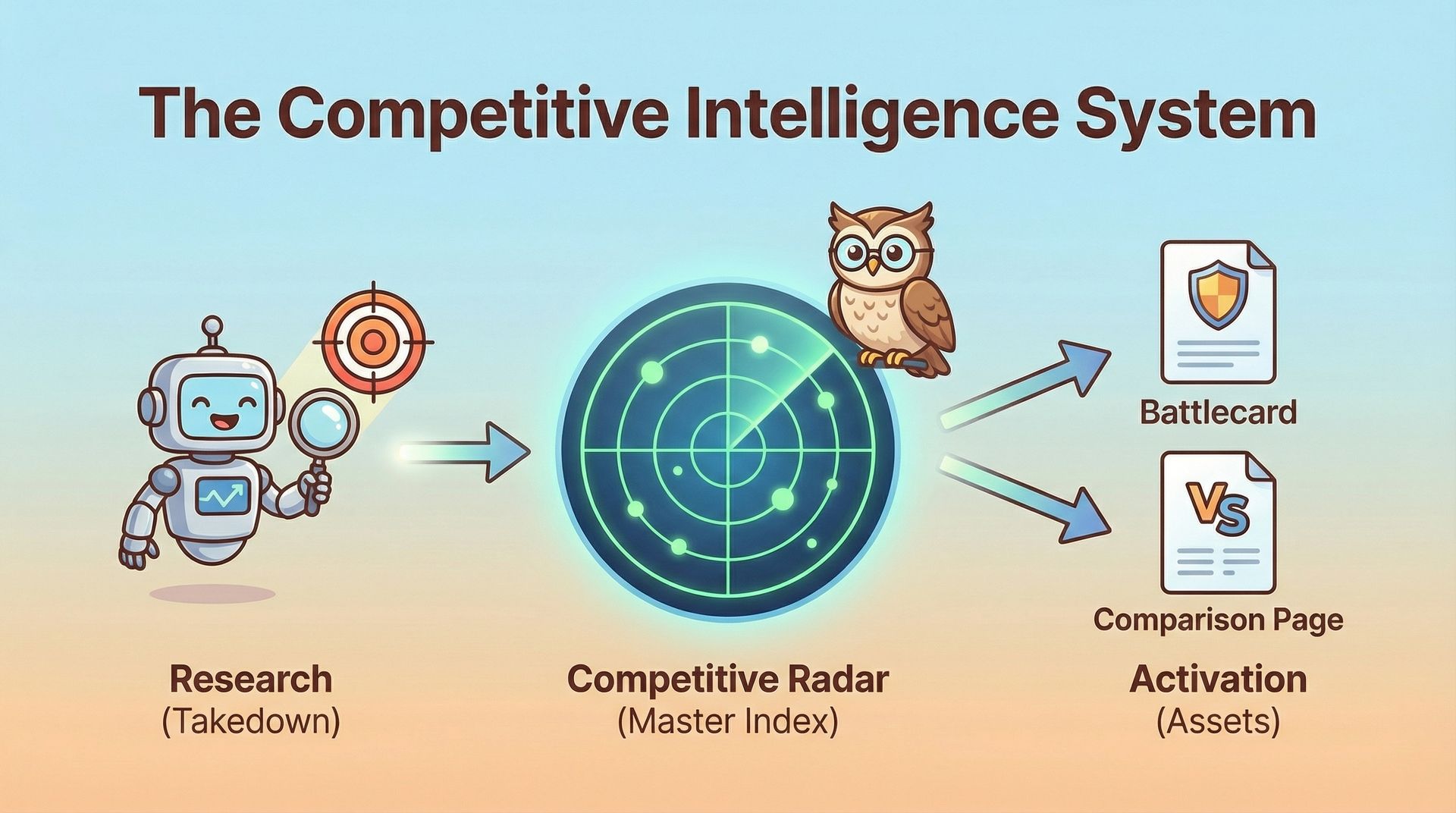
In this guide, you will learn how to set up a competitor intelligence database powered by Claude Cowork. The best part? It builds itself. Simply download the prompt files and tell Claude to set it up, and it will be ready to use in 5 minutes.
- —Grab our free prompt files, save them in a new folder, and select that folder by heading to the “Cowork tab” in the Claude desktop app (Mac only).
- —Tell Claude to read the SOP and set up your directory. Should take 2-3 minutes.
- —To test it out, give Claude [competitor name] + [website link]. Claude will create a report called a “killsheet” and file it away for you.
- —Run a new killsheet generation each quarter and after big competitor news.
Pro tip: Ask Claude to build battlecards and comparison pages based on the killsheet!

🎬Darren Aronofsky debuts AI Revolutionary War series
Filmmaker Darren Aronofsky's AI venture Primordial Soup released "On This Day… 1776", a new series recreating the American Revolution using Google DeepMind, with each episode dropping on the 250th anniversary of the event it depicts.
- —The short-form series combines AI-generated visuals with SAG-AFTRA voice actors, positioning itself as "artist-led" AI rather than being fully automated.
- —The series drops episodes on TIME's YouTube channel timed to the 250th anniversary of each depicted event.
- —Aronofsky partnered with DeepMind in May to collaborate on AI storytelling, releasing the Veo-assisted film ANCESTRA in June at the Tribeca Film Festival.
Why it matters: AI video is creeping further into real production studio workflows, and moving from simple shorts and hidden tricks to hide faces to handling the entire visual process. While it still might not be fully accepted or mainstream, the sentiment is shifting — and Hollywood’s once-uneasy use of the tech is coming more into focus.